
◇
Small over large
We build models under a few billion parameters. Small enough to run on constrained hardware, focused enough to do one thing exceptionally well.
AI Teaching Stack for India
Sankhya builds memory, speech, and learning systems for Indian education. SensAI turns that stack into an adaptive AI teacher for schools, coaching institutes, and serious learners.
Why this stack
Useful education AI is not just a chatbot. It has to remember the learner, understand spoken input, explain clearly, and work inside the real constraints of Indian classrooms and coaching workflows.
We build models under a few billion parameters. Small enough to run on constrained hardware, focused enough to do one thing exceptionally well.
Every model we build solves a defined problem — remembering a learner, recognising Indian speech, generating instructional voice. Not everything at once.
Our models are designed to run on their own — on-device, offline, or with minimal cloud. No vendor lock-in. No API dependency for core functions.
What we are building
SensAI is the visible product. Underneath it, we are building Dhee for learner memory, Akshar for speech recognition, Shlok for instructional voice, and a compact runtime for lower-cost deployment.
An in-house memory system that lets teaching agents carry context, preferences, and understanding across sessions. Dhee makes real personalization possible — not just prompt-level memory, but structured recall over time.
A speech-to-text stack being built for Indian accents, classroom noise, code-switching, and multilingual student interaction. Not a wrapper — a model trained on how India actually speaks.
A text-to-speech model for natural, warm, Indian-language teaching voice. Built for the tone, cadence, and clarity that instructional speech demands — not generic assistant voice.
A lightweight model architecture designed for low-end devices and poor-connectivity schools. The goal: the full Sankhya stack running independently, beyond cloud dependence.
Why this matters
Most AI products are built for broad conversation, stable connectivity, and English-first workflows. Teaching in India needs tighter memory, clearer speech handling, and systems that work in real institutional conditions.
Most AI products chase scale, not specificity
The industry defaults to ever-larger models for ever-broader tasks. But most real-world problems — especially in education — need focused, reliable execution, not general intelligence.
Generic models fail at Indian realities
Indian accents, code-switching, regional languages, mixed devices, and weak connectivity are not edge cases. They are the baseline. Most global AI products treat them as afterthoughts.
Cloud dependency limits who you can serve
Always-on cloud assumptions break quickly in the environments that need AI the most — under-resourced classrooms, rural coaching centers, and low-bandwidth regions.
Our response
Sankhya's answer is to own the layers that shape teaching quality: learner memory, speech input, instructional voice, and efficient deployment. That is how we move beyond generic chat and toward a product that can actually support Indian classrooms and coaching systems.
Proof in product
SensAI is our adaptive AI teacher product for schools, coaching institutes, and learners. It is where we test teaching workflows, memory continuity, and product behavior with real users instead of stopping at model demos.
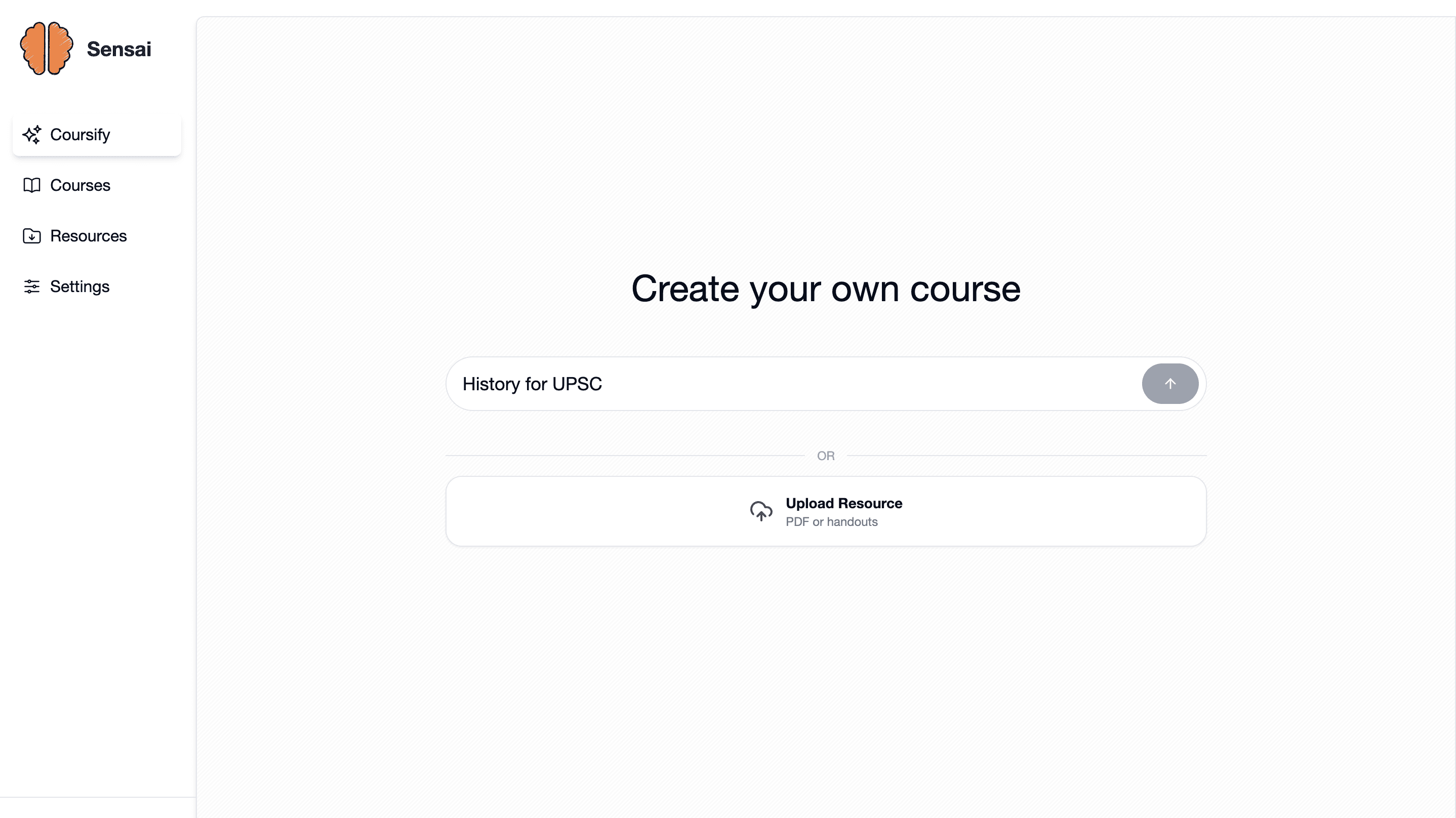
Create structured learning
SensAI can start from a topic prompt or uploaded material and shape it into a usable learning path instead of leaving the learner with a blank chat box.
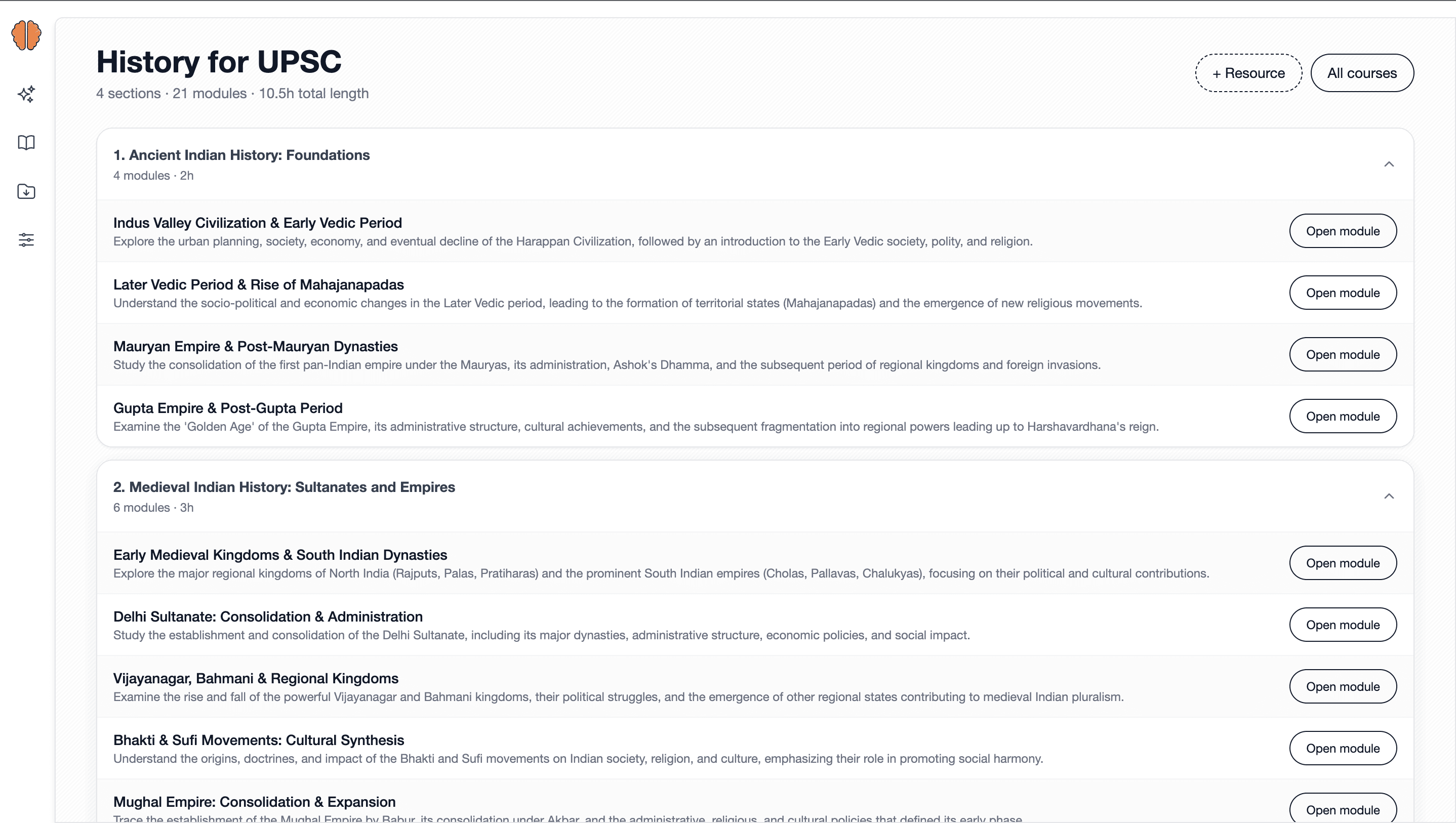
Organize the journey
Course structure matters in both curriculum learning and exam preparation. SensAI helps package content into a format that feels teachable and revisable.
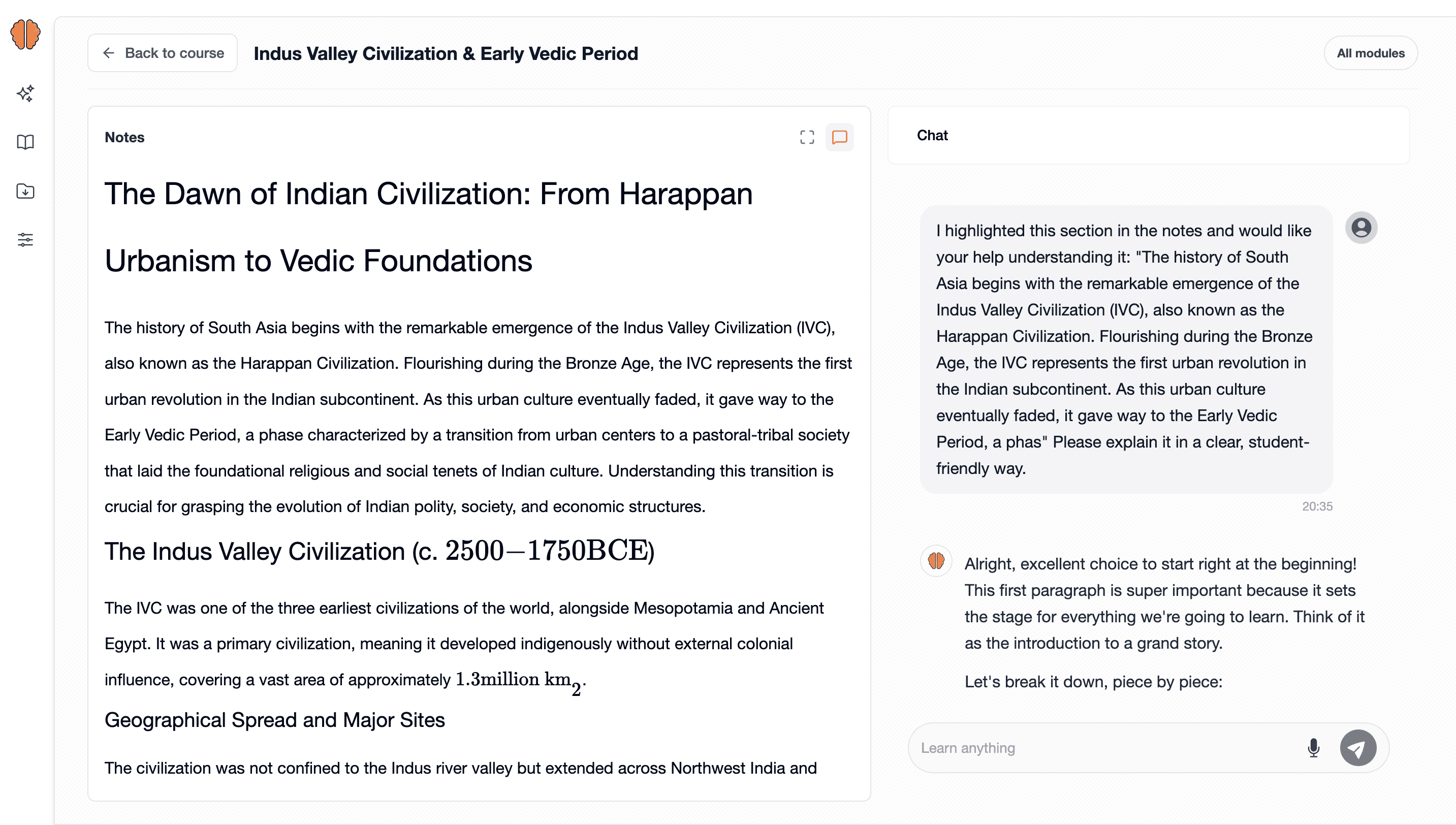
Study with support
SensAI keeps the learner close to the material while still enabling guided explanation, clarification, and teacher-style assistance.
India-first by design
The constraints — multiple languages, mixed devices, unreliable connectivity, dense classrooms — are features, not bugs. They force us to build models that are smaller, faster, and more resilient. If our models work here, they work anywhere.
Learner memory layer
Dhee helps the teaching system remember how a learner has been taught, where they struggled, and what style worked better over time. Open-source on GitHub.
Speech recognition
Being built for Indian accents, classroom noise, code-switching, and the realities of spoken educational interaction. Not a wrapper around existing STT.
Speech generation
The voice layer being built for clear, natural instructional speech across Indian-language teaching scenarios. Warm, not robotic.
Edge deployment
A lightweight model architecture so the Sankhya stack can eventually run on lower-end devices and in weak-connectivity environments — independently.
Language
Not just English-first with Indian language support bolted on. Our models are trained on Indian language patterns, accents, and code-switching from the ground up.
Infrastructure
Always-on cloud assumptions break quickly outside major cities. Our compact model direction accounts for weak bandwidth, intermittent connectivity, and low-end devices.
Privacy
On-device and edge deployment isn't just a feature — it's a privacy architecture. Student data stays with the institution, not on someone else's cloud.
Cost
Small, task-specific models cost less to run. That's not a tradeoff — smaller models that are good at one thing often outperform large, general-purpose models at that specific task.
Built in India. Built for India.
If you're a school, college, coaching institute, or a partner interested in memory, speech, and learning infrastructure for education, we'd love to talk.